How does government office furniture procurement work in Australia?
| Key takeaways: | |
|---|---|
| • | Government office furniture procurement usually happens through tenders or pre-approved panels, not ad hoc buying. |
| • | Quality, fitness for purpose, environmental impact and whole-of-life costs impact value for money just as much as price. |
| • | Federal agencies use AusTender to publish opportunities, while state departments use their own procurement portals. |
| • | Outright purchase, leasing, lease-to-own and turn-key packages are all options for procurement. |
Even if you know exactly how many desks, chairs and meeting tables an office needs, government office furniture procurement means you can’t simply go ahead and pick a supplier and place an order. Depending on the agency, jurisdiction and total spend, the purchase may need to go through an open tender or an existing standing-offer panel.
Outside of the furniture itself, the decision must also be able to show value for money and meet applicable sustainability and compliance requirements. The steps below cover what to expect at each stage.

The government furniture procurement process, stage by stage
Needs assessment and budget
The first step in government furniture procurement is confirming the headcount and how staff will use the space. This should take into account:
- Fit-out specifications
- Furniture quantities
- Workspace standards
- Planned growth
- Ergonomics
- Accessibility needs
- Installation
- Furniture that can be reused
The agency’s approval cycle also needs to be considered. Spending can increase towards the end of the financial year, so make sure to leave time for procurement, manufacturing and delivery before 30 June.
Going to tender or buying off a panel
Once the requirement has been approved, the agency can run an open tender or buy through an existing standing offer or government furniture panel. Commonwealth office fit-out tenders are published on AusTender, while state opportunities are listed on the relevant tender portal, such as:
- buy.nsw
- Buying for Victoria
- Queensland tender portals
As at 4 August 2026, the Commonwealth non-construction procurement threshold is $125,000 for non-corporate entities and $400,000 for prescribed corporate entities, including GST.
Evaluation and compliance
Agencies need to be aware value for money doesn’t exclusively refer to the cheapest office fit-out tender submission. Under the Commonwealth Procurement Rules, buyers must also consider financial and non-financial factors, including:
- Quality and fitness for purpose
- Supplier experience and performance
- Upfront and whole-of-life costs
- Environmental sustainability
- Modern slavery risks
- Furniture, ergonomics, accessibility and WHS requirements
The final documentation should clearly show how the selected supplier met the evaluation criteria and how it translates into value for money.
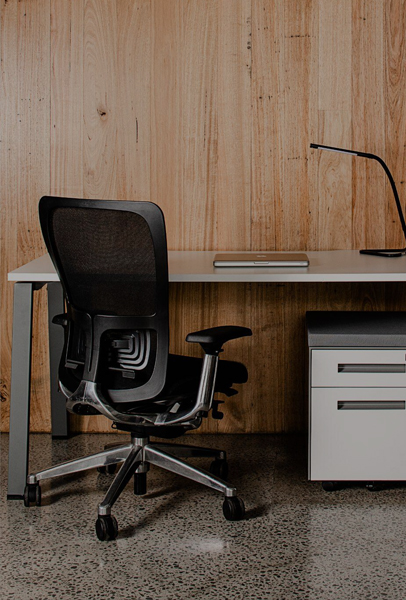
Value for money doesn’t exclusively refer to the cheapest office fit-out tender submission. Quality, whole-of-life costs, sustainability and compliance also shape the final decision.
Buy vs lease for government offices
While buying can suit permanent workplaces with stable headcounts and approved capital budgets, government office furniture leasing gives you more flexibility for temporary locations, project and agile teams, as well as expansion. The final capex or opex treatment will also depend on the agency’s accounting policies.
Some of the main pros and cons of renting versus buying office furniture include:
| Factor | Buying Pros & Cons | Leasing Pros & Cons |
|---|---|---|
| Budget profile | Higher upfront cost | Payments spread across the term |
| Budget-cycle flexibility | Budget committed at purchase | Payments may align with operational needs |
| Workplace changes | Surplus assets remain with the agency | Furniture may be scaled or changed |
| End of life | Agency manages storage, resale or disposal | Supplier collects furniture for reuse |
| Sustainability | Relies on durability, repair and responsible disposal | Furniture is kept in circulation |
| Compliance | Procurement rules apply | Leasing doesn’t bypass procurement rules |
To make the decision even easier, Valiant offers turn-key procurement, commercial furniture leasing and lease-to-own options for agencies needing flexibility across budget cycles. Our B Corp certification and carbon-neutral hire also meet sustainability criteria during most supplier evaluations.
Frequently asked questions
Do government offices have to go to tender to buy furniture?
Not always. Agencies may be able to use another permitted method below the relevant threshold or buy office furniture through an existing panel. The applicable procurement rules and value-for-money requirements still apply.
What is a standing offer or panel arrangement?
While all government furniture panels are standing offers, not all standing offers are panels. A standing offer sets the terms, pricing basis and period under which the agency can buy specified goods or services involving one or more suppliers. Panel arrangements is a standing offer involving multiple pre-approved suppliers, so agencies have a choice of suppliers whenever they need to make a purchase.
Talk to Valiant about government furniture procurement
With experience working on office fit-out tenders for 20+ years, Valiant Hire understands the practical requirements behind government workplaces, offering turn-key delivery, flexible hire and sustainability reporting. Talk to our team about government office furniture hire to work with a Certified B Corporation for carbon-neutral hire specific to your goals and fit-out for your next project.
Valiant Hire supports government workplaces with turn-key delivery, flexible hire and sustainability reporting across office fit-out tenders and procurement projects.