
Reflection as Material and Mindset
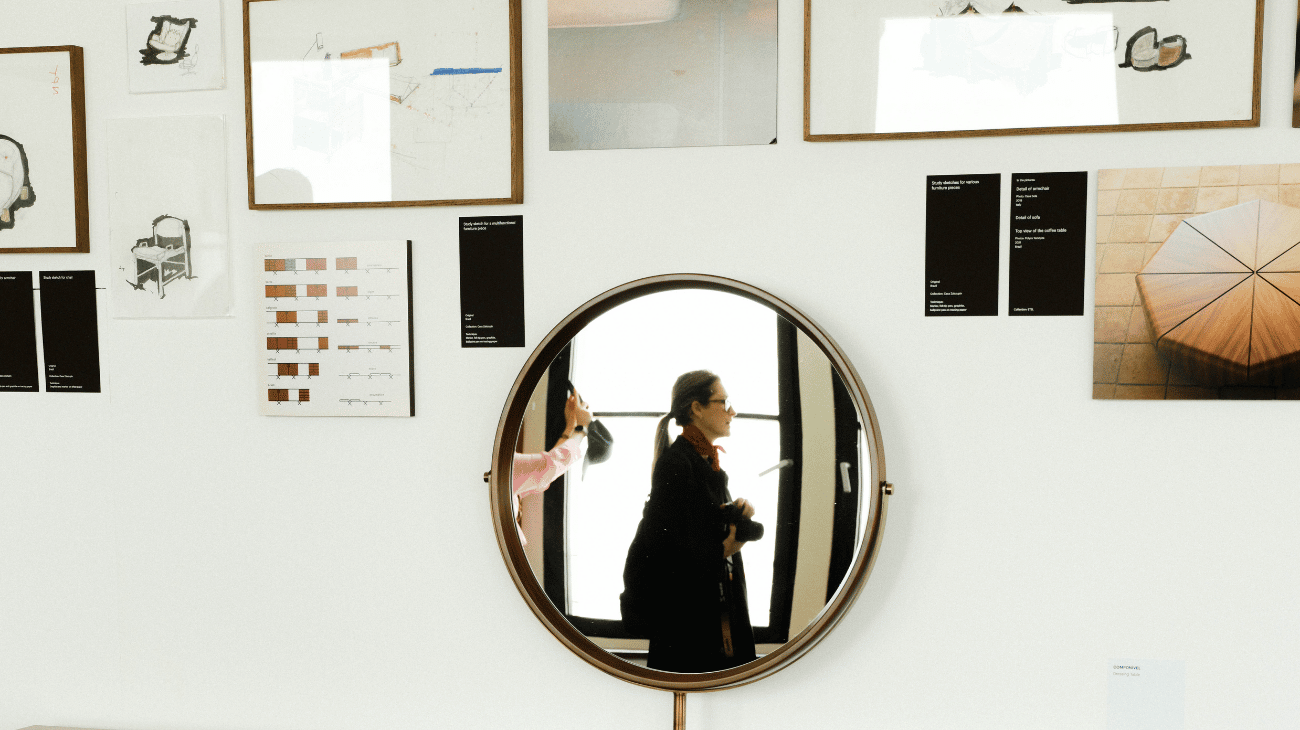
“Reflections of Milan” is both a retrospective and a position. It captures key observations from Milan Design Week 2026 while referencing one of the week’s most dominant directions, reflection in all its forms: mirrors, chrome, gloss lacquer, and polished metals, using light as a design medium.
Under the broader theme “Be the Project,” reflection extends beyond the surface. It becomes methodology, an act of observing, absorbing, and reinterpreting.
.png)
Material Contrast to Expressive Reflection
Reflection was often expressed through contrast. The collaboration between Kelly Wearstler and H&M Home paired brushed steel and high gloss ceramics with matte textiles and raw finishes, creating a controlled interplay between absorption and reflection.
Zara Home’s CALMA approached this with restraint, using polished chrome and silver leather as subtle interruptions within neutral spaces. At the opposite end, Full Metal Banquet by Luc Druez transformed industrial metal waste into intricate, reflective forms, balancing opacity and shine.
For Interiors, this signals a shift toward layered material palettes. For Events, it demonstrates how reflective materials can scale from minimal accents to immersive installations.
Nostalgia and Era-Surfing
Alongside material exploration, a strong retrospective undercurrent emerged. Designers revisited the past not through replication, but through curated juxtaposition.
Analogue technology and collectable design objects were positioned alongside contemporary furniture to create narratives not tied to a specific time or place. Shag carpets, satin finishes, and leopard print appeared alongside chrome tables, coloured glass, and objects such as record players, telephones, and typewriters, evoking a sense of selective glamour.
For Interiors, this reinforces the role of curation and storytelling. For Events, it introduces a direction for creating environments that feel collected rather than constructed.
.png)
“This year saw nostalgia return as era-surfing, where analogue objects met contemporary furniture to create timeless, placeless narratives. Shag carpets and satin sat against chrome, coloured glass, and vintage tech, evoking selective glamour.”
.png?width=900&height=505&name=Blog%20Image%20-%20Paste%20in%20Text%20%20(2).png)
Reflections from the Past
Designers consistently looked backward to move forward. Installations such as Mua Mua Hotel, Hotel Nilufar, and Miu Miu Literary Club used familiar archetypes to construct immersive, narrative-led environments.
At Alcova, a reflective steel plate inscribed with “Time is the best feast we have” positioned time itself as a design material.
For Events, this introduces a shift toward designing for dwell time. For Interiors, it reinforces the role of curation in creating layered, meaningful spaces.
.png)
Sensory Reflection and Application
Reflection extended beyond the visual into scent and sound. Piero Lissoni’s Sensory Landscape introduced fragrance as a spatial layer, while listening rooms and ambient audio shaped atmosphere.
This multi-sensory approach moves design into something more immersive and memorable. For Interiors, it expands styling beyond the visual. For Events, it reinforces the role of experience, creating environments that are not only seen, but felt.
.png?width=1300&height=730&name=Blog%20Image%20-%20Paste%20in%20Text%20%20(1).png)
These ideas are already informing our own work. Projects such as Pacific Fair’s Autumn/Winter 2026 visual merchandising pods reflect an ongoing exploration of mirrored finishes and chrome detailing, not as trend adoption, but as an evolution of a broader design language.
Returning to the Magis showroom, Rooted in the Future, design was framed as a continuum. Past, present, and future coexisting in dialogue. This moment now reads as a reflection in itself, establishing the foundation for a week where design is not fixed, but constantly evolving through what came before.
“Scent is crafted like a story; it should have a beginning, a middle, and an end that you remember.”
.png)